
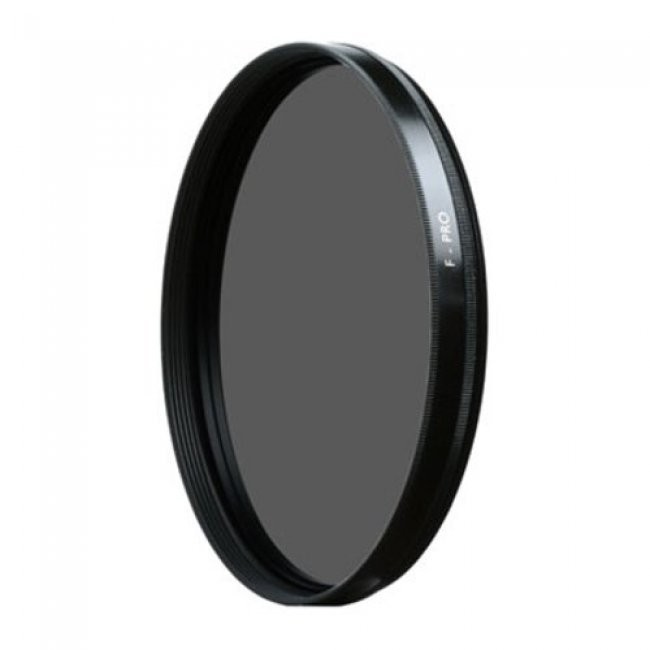
B+W Filtro CPL 52mm
Spain: 2 to 7 business days, France: 5 to 10 business days
The B+W MRC 52mm circular polarizing filter offers high optical quality to eliminate unwanted reflections on non-metallic surfaces, enhance contrast and saturate colors.
Main features
- Superior optical quality: high-precision glass for sharp images.
- Quick alignment: optimized knurling for easy grip and adjustment.
- Smooth assembly: new coating on the thread for easy screwing in.
- Versatility: suitable for lenses from wide-angle to telephoto.
- Full compatibility: for all cameras, without interfering with autofocus or light metering.
Specs
- Diameter: 52 mm
- Line: Basic MRC
- Type: Circular Polarizer (C-POL)
- Envío gratuito en Andorra a partir de 99 €
- Garantía oficial de distribuidor autorizado
- Devolución sin complicaciones en 14 días
Description
Polarizing filters enhance color purity and increase color saturation, making them perfect, for example, for intensifying and darkening the blue of the sky; the best effect is achieved when shooting with the sun at 90°.
They are also used to reduce reflections on non-metallic surfaces, such as shop windows or water. The filter factor is between two and three stops of aperture.
The circular polarizer is suitable for both analog and digital cameras and does not affect AF or TTL exposure systems as linear polarizers can.
High-efficiency standard circular polarizing filter for all cameras with beam splitters in the light paths of their TTL exposure meters and autofocus lenses. Circular polarization has the same painterly effect as linear polarization, but allows for correct exposure metering and/or autofocus distance adjustments. B+W polarizers increase color saturation and reduce flare.
The neutral grey colour and the flat parallel polarising material ensure optimal image results.
High-quality optical glass ensures excellent picture quality.
The filter factor varies depending on the position of the filter relative to the sun.
The filter factor is between 2.3 and 2.8.
Linear and circular polarizers both consist of a linear polarizing plate, but differ in their construction as follows. Modern SLR cameras have a beam-splitting prism that sends part of the incoming light to the meter and part to the viewfinder. The effect is that the light entering the meter is partially polarized by the beam splitter. A linear polarizer placed in the lens of such a system will act as a second polarizer and block the light to the meter to a degree dependent on the angle between the prism and the polarizer in the lens. The result is incorrect exposure/aperture values for the meter.
The circular polarizer avoids this problem by adding a 1/4-wave retarder, or retardation plate. This ensures that linearly polarized light is converted to a rotational polarization that appears unpolarized to the meter, resulting in proper exposure/aperture readings.
Reviews
Sé el primero en opinar
Si ya lo tienes, cuéntanos qué tal. A quien esté dudando le ayuda mucho.


