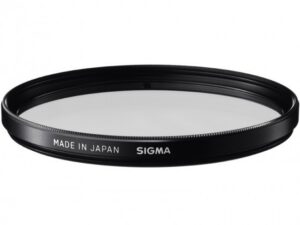

Hoya filtro UV 67mm
39,90 €
Add to cart
Spain: 2 to 7 business days, France: 5 to 10 business days
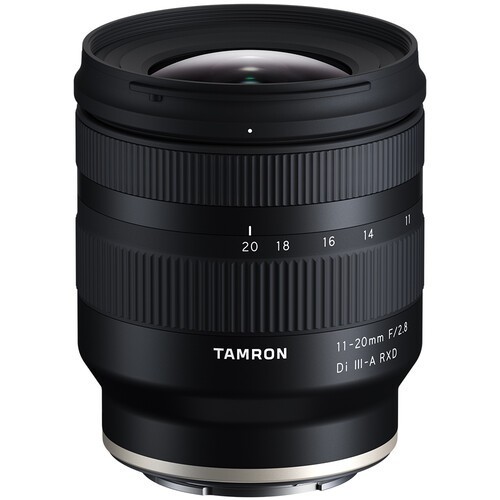
The Tamron 11-20 F2.8 DI III-A RXD Sony E is an ultra-wide-angle lens for Sony E-mount cameras with APS-C sensor offering constant F2.8 aperture in an ultracompact body of just 335 grams. The 11-20 mm focal range (equivalent to 16.5-30 mm in full-frame) provides viewing angle of 105°20' to 71°35' ideal for landscapes, architecture and interiors. The minimum focusing distance of 0.15 m at 11 mm enables spectacular close-ups with 1:4 ratio creating dramatic perspective effects. The RXD motor provides fast and silent focusing fundamental for video. Optical configuration of 12 elements in 10 groups with XLD and LD glass plus GM aspherical elements minimizes chromatic aberrations. Moisture-resistant construction with fluorine coating on front lens. A mirrorless camera lens that redefines ultra-wide-angle portability with fast aperture.
The Tamron 11-20 F2.8 DI III-A RXD Sony E is the world's first ultra-wide-angle zoom lens for Sony E-mount APS-C mirrorless cameras with constant F2.8 aperture across the entire focal range. The optical configuration of 12 elements in 10 groups includes special XLD (extra-low dispersion), LD (low dispersion) glass and two GM (Glass Molded Aspherical) aspherical elements optimally arranged to suppress optical aberrations. With just 335 grams weight and 86.2 mm length, it's so compact it's hard to believe it's a full fast-aperture ultra-wide-angle zoom.
The two GM aspherical elements maintain high-resolution performance across the entire frame with a well-balanced arrangement that corrects spherical aberration. The XLD and LD elements suppress chromatic aberrations that tend to occur when shooting with the wide aperture of fast lenses, generating clear and sharp images. Additionally, using the lens correction functions built into Sony cameras allows users to leverage additional performance gains from the lens.
The minimum focusing distance reaches 0.15 m (15 cm) at 11 mm and 0.24 m (24 cm) at 20 mm, guaranteeing the ability to get as close to subjects as desired up to the 1:4 magnification ratio. This capability creates a dramatic depth effect where close objects appear enormous and distant ones tiny due to the exaggerated proportion graduation typical of ultra-wide-angles.
With the aperture fully open at F2.8, the sharpness range is shallow allowing emphasis of important areas through specific use of sharpness and blur. The fast aperture allows maintaining a high shutter speed even when shooting in dark conditions, capturing sharp images with minimal hand movement. In practice, you can photograph details at 15 cm filling the frame while the background softly blurs, something unusual in a wide-angle lens where normally everything appears in focus.
The lens incorporates a fast precision AF drive system with an RXD (Rapid eXtra-silent stepping Drive) stepping motor unit. The RXD motor uses a sensor that constantly detects the current focus setting, allowing continuous AF-C autofocus to precisely target the rotation angle needed for lightning-fast focusing.
Operation is almost completely silent, so video recordings don't capture disturbing operational noise. The internal focusing IF system prevents the barrel from extending and rotating during focusing, maintaining constant lens length. This facilitates handling especially with gimbal stabilizers where any weight or dimension change would compromise balance, and is crucial when using polarizing or graduated neutral density filters where front lens rotation would misalign the effect.
By combining the Sony E-mount camera lens Tamron 11-20mm F2.8 with the Tamron 17-70mm F2.8 Di III-A VC RXD (model B070), the combination of these two lenses covers an extreme range of focal lengths from 11 mm to 70 mm (equivalent to 16.5-105 mm on full-frame cameras) with fast and wide F2.8 aperture. The combined weight of the two lenses is approximately 860 grams.
Drastically reducing bulky size and weight can enormously lighten the load during shooting and transport, being convenient during travel when you want to reduce camera bag size and weight as much as possible. Like most other Tamron lenses for Sony E-mount cameras, the filter size is unified at ø 67 mm. Besides allowing shared use of polarizing and other filters between lenses, the unified size also eliminates the hassle of finding the correct lens cap when changing lenses.
The mirrorless camera lens Tamron 11-20mm incorporates moisture-resistant construction with special seals in all critical areas, allowing work under light rain or in environments with fog, dew or splashes. The fluorine coating on the front lens protects against contamination, preventing oil and water droplets from adhering to the surface. Fingerprints and dirt are easier to remove, crucial in an ultra-wide-angle lens where any smudge on the front lens visibly affects the image.
The circular 7-blade diaphragm produces smooth bokeh in defocused areas, although limited by the ultra-wide-angle nature of the focal length. The compact 86.2 mm size and light 335-gram weight make the lens ideal for travel photography, vlogging, documentaries and any situation where portability is priority without sacrificing optical quality or fast aperture. You can focus on shooting without worrying about volume or weight, enjoying carefree manual capture of still images, or even finding it easy to record videos with a compact tripod or gimbal.
Optical construction
12 elements in 10 groups
XLD (extra-low dispersion) glass
LD (low dispersion) glass
2 GM (Glass Molded Aspherical) aspherical elements
Fluorine coating on front lens
Focal range and aperture
Focal length 11-20 mm (zoom)
Equivalent to 16.5-30 mm in full-frame (1.5x crop factor in Sony E APS-C)
Constant F2.8 aperture
Minimum aperture F16
Viewing angle 105°20' (11mm) - 71°35' (20mm)
Focusing
RXD (Rapid eXtra-silent stepping Drive) motor
Internal focusing IF system
Minimum focusing distance 0.15 m (11mm) / 0.24 m (20mm)
Maximum magnification ratio 1:4 (11mm) / 1:7.6 (20mm)
Diaphragm
7 circular blades
Construction and weather resistance
Moisture-resistant construction
Special seals in critical areas
Compatibility
Sony E mount
APS-C sensor coverage
Compatible with Sony cameras A6000, A6100, A6300, A6400, A6500, A6600, A6700, ZV-E10, ZV-E10 II, FX30
Compatible with built-in lens correction in Sony cameras
Filter diameter
67 mm
Dimensions and weight
Maximum diameter 73 mm
Length 86.2 mm
Weight 335 grams (Sony E mount)
Tamron 11-20 F2.8 DI III-A RXD Sony E lens
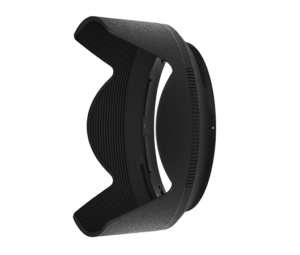
Lens hood
Front and rear caps
The Tamron 11-20 F2.8 DI III-A RXD Sony E is designed specifically for APS-C sensors and doesn't cover the full-frame image circle. If you mount it on a Sony full-frame camera like the A7 series, the camera will automatically activate APS-C crop mode reducing resolution to approximately 10-18 megapixels depending on the model. For full-frame cameras it's recommended to use lenses from the DG DN series like the Tamron 17-28mm F2.8 Di III RXD.
On Sony APS-C cameras with 1.5x crop factor like the A6700, ZV-E10 or FX30, the ultra-wide-angle lens Tamron 11-20mm F2.8 offers an equivalent focal length of 16.5-30 mm in full-frame. This provides an ultra-wide-angle viewing angle ideal for wide landscapes, architecture, tight interiors, vlogging and travel photography where you need to capture wide scenes.
Yes, the APS-C camera lens Tamron 11-20mm F2.8 was designed with special XLD, LD glass and GM aspherical elements optimally arranged that maintain high-resolution performance across the entire frame even at F2.8. Ultra-wide-angle lenses traditionally suffer from distortion and corner sharpness loss, but this Tamron's advanced optical configuration maintains professional edge-to-edge quality without needing to stop down the aperture.
Yes, at just 335 grams weight the mirrorless camera lens Tamron 11-20mm F2.8 is ideal for gimbal use. Its ultralight weight facilitates balancing on stabilizers when combined with compact Sony APS-C cameras like the ZV-E10, A6400 or FX30. The silent RXD motor and internal focusing without barrel extension make it an excellent option for dynamic video production, vlogging and documentaries where you need smooth movements with ultra-wide angles.
The minimum focusing distance is 0.15 m (15 cm) at 11 mm with a magnification ratio of 1:4. At 20 mm the minimum distance is 0.24 m (24 cm) with 1:7.6 ratio. This extremely close focusing capability enables wide-angle macro photography where you can get close to the subject creating dramatic perspective effects with huge foregrounds and vertiginously receding backgrounds.
It's for you if:
It's not for you if:
Sé el primero en opinar
Si ya lo tienes, cuéntanos qué tal. A quien esté dudando le ayuda mucho.